
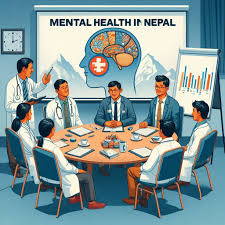
Mental health is a growing public health concern in Nepal, including in Madhesh Province, where social, economic, and cultural factors contribute to psychological stress and limited access to services. National data show that mental disorders are common across the country: approximately 10 % of adults and 5.2 % of adolescents have experienced a mental disorder in their lifetime, and suicidality—thoughts or attempts—is present in 7.2 % of adults and 4.1 % of adolescents.
Major depressive disorder, anxiety disorders, and substance use disorders are among the most prevalent conditions. Globally in Nepal, mental disorders affect about 3.9 million people, with depression and anxiety being the most widespread conditions. The proportional contribution of mental disorders to the total disease burden in Nepal has tripled between 1990 and 2019, highlighting a rising trend that also impacts Madhesh communities.
Specific national surveys show that general mental health symptoms are common: about 11 % of people report anxiety, 5 % report depression, and combined symptoms of anxiety and depression affect nearly 22 % of the population aged 15‑49. Women are disproportionately affected, with anxiety reported by 22 % of women compared to 11 % of men.
While province‑level breakdowns are limited, National Mental Health Survey data indicate that current mood disorders (e.g., major depression or bipolar disorder) are present in about 0.6 % and lifetime mood disorders in about 0.5 % of people in Madhesh, which are lower than in some other provinces but still reflect an important burden requiring attention.
Access to mental health services remains very limited. Only about 25 % of health facilities in Nepal offer any mental health services, and rural and remote areas—like many parts of Madhesh—are underserved. Of those facilities, only 16 % reported having staff trained in mental health in the past two years. This gap means that many people with anxiety, depression, or other disorders do not receive appropriate care.
Stigma and low awareness further hinder help‑seeking: national surveys show that care‑seeking behaviour is low, with only 13‑19 % of people with symptoms actively seeking professional support.
Mental health problems are also linked to broader social issues that are significant in Madhesh Province, such as poverty, gender inequity, and social exclusion. Studies show that poorer individuals and women are more likely to experience anxiety and depression, and that environmental stressors like economic insecurity and social pressures amplify mental health burdens.
Key Challenges in Mental Health
- High prevalence of common disorders: Anxiety and depression are among the most commonly reported conditions nationally and likely present in Madhesh’s population as well.
- Widespread stigma and low help‑seeking: Cultural norms and stigma reduce willingness to seek mental health support.
- Limited service coverage: Most health facilities, especially in rural and less resourced areas, do not provide mental health support, and trained professionals are scarce.
- Gender and socio‑economic disparities: Women and lower‑income groups show higher levels of anxiety and depression.
Recommendations for Madhesh Province
- Integrate Mental Health into Primary Care:
- Expand mental health services at primary health care centres throughout Madhesh, ensuring routine screening for depression and anxiety.
- Train community health workers and nurses in basic mental health care and referral systems.
- Strengthen Awareness and Reduce Stigma:
- Launch community education campaigns to normalise conversations about mental health, especially in rural areas and among youth.
- Work with schools and women’s groups to promote understanding of mental well‑being and early help‑seeking.
- Expand Workforce and Training:
- Invest in training for psychologists, counsellors, and psychiatrists, and offer incentives for professionals to work in Madhesh’s underserved areas.
- Provide ongoing capacity building for existing health workers on identifying and managing common mental disorders.
- Improve Data and Monitoring:
- Support province‑level mental health surveys to understand local prevalence and guide targeted interventions.
- Establish monitoring systems within health facilities to track service use and outcomes.
- Promote Supportive Community Services:
- Establish community support groups, peer counselling, and helplines in local languages.
- Integrate mental health into school health programs to support adolescents facing stressors such as academic pressure and social exclusion.
- Link with Social Protection:
- Ensure that vulnerable groups, such as women, migrants, and marginalised communities, have access to psychosocial support through social welfare and employment programs.
Summary:
Mental health is a critical and growing issue in Nepal that also affects Madhesh Province. While specific provincial data are limited, national evidence points to a significant prevalence of anxiety, depression, and other disorders, low service coverage, and major gaps in training and care delivery. Addressing mental health in Madhesh requires integration into primary care, community awareness, expanded workforce capacity, and targeted support for vulnerable populations to build an inclusive and resilient health system.