
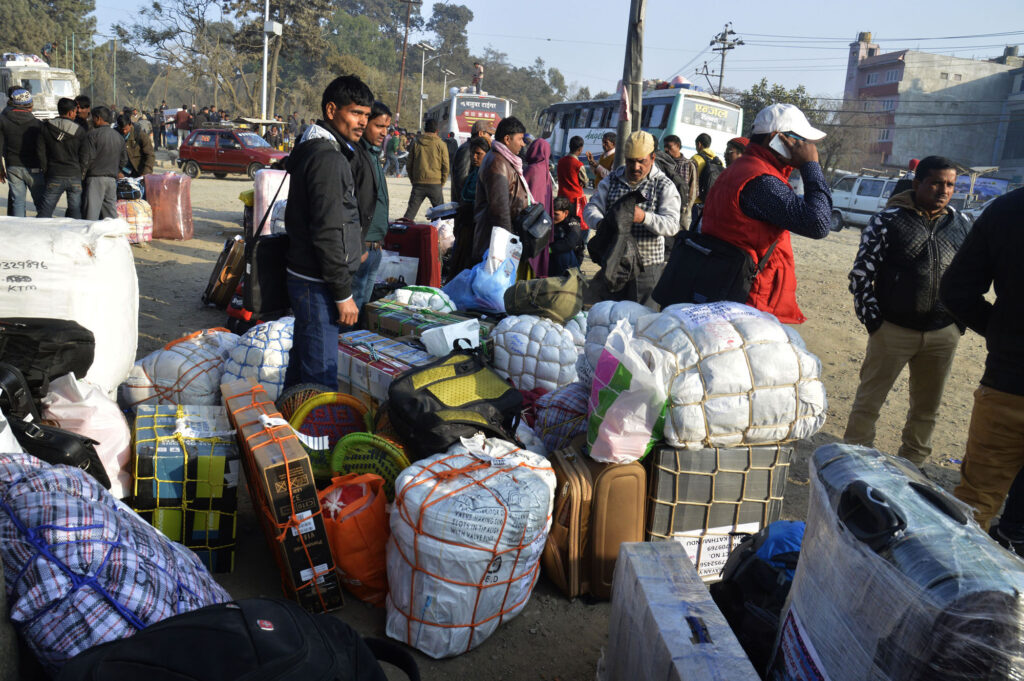
Madhesh Province, located in the Terai plains of Nepal, has one of the highest rates of internal and international migration in the country. Migration is both a livelihood strategy and a coping mechanism for poverty, unemployment, social exclusion, and environmental stress.
Trends and Drivers
- International Migration: A significant portion of the Madhesh population migrates abroad, primarily to Gulf countries, Malaysia, and India, seeking employment in construction, manufacturing, and domestic work. According to the Department of Foreign Employment (DoFE), approximately 150,000 workers annually leave Nepal from Madhesh Province for foreign employment. About 60–70% are men, while the rest are women, mainly engaged in domestic and caregiving work.
- Internal Migration: Many households in Madhesh send family members to urban centres such as Kathmandu, Biratnagar, and Janakpur for seasonal or permanent work. Migration within the province is also significant, particularly among youth seeking educational or employment opportunities in municipalities.
- Drivers: The key drivers of migration include:
- Economic: Lack of productive land, low agricultural productivity, and limited livelihood opportunities.
- Social: Caste, gender, and social exclusion create limited local opportunities.
- Environmental: Seasonal floods, droughts, and climate change-related risks, such as riverbank erosion and crop loss, force households to seek livelihoods elsewhere.
- Educational: Limited access to quality higher education compels youth to migrate to cities or abroad.
Impacts of Migration
- Economic Impacts:
- Remittances are a major source of household income, contributing 20–25% of provincial GDP in some districts of Madhesh.
- Migration allows households to invest in housing, education, and small businesses.
- Social Impacts:
- Female-headed households increase as men migrate abroad, altering household dynamics and care responsibilities.
- Prolonged separation affects family cohesion, child education, and psychosocial well-being.
- Health Impacts:
- Migrants face occupational hazards abroad, including unsafe working conditions, injury, and mental health stress.
- Returning migrants often carry health risks, including non-communicable diseases and reproductive health concerns for women.
- Demographic and Labour Impacts:
- High outmigration of working-age men leads to labour shortages in agriculture and local industries.
- Youth migration can create both challenges (skill gaps locally) and opportunities (remittance-fuelled investments).
Data Evidence
- According to the National Population and Housing Census 2021, Madhesh has one of the highest migration rates among Nepal’s provinces, with 25–30% of households having at least one member working abroad.
- Research by IOM (International Organisation for Migration) shows approximately 40% of migrants from Madhesh were below 35 years old, highlighting youth-driven migration.
- Seasonal floods and erosion in districts like Saptari, Siraha, and Dhanusha contribute to increased outmigration from disaster-prone villages, with some households migrating permanently due to loss of arable land.
Challenges Linked to Migration
- Vulnerability of Migrants: Lack of awareness of rights, exploitative contracts, and unsafe working conditions abroad.
- Impact on Families: Women and children bear additional responsibilities at home, often without adequate support.
- Skill Gaps: Migrants may acquire limited transferable skills, and local labour markets are left with shortages.
- Climate-Induced Migration: Recurring floods, droughts, and riverbank erosion increase displacement and migration as a coping mechanism.
Recommendations for Madhesh Province
- Enhance Livelihood Opportunities Locally:
- Promote agro-based enterprises, small-scale industries, and vocational training to reduce forced migration.
- Support returnee migrants in skill upgrading and entrepreneurship, including access to microfinance and business mentoring.
- Strengthen Migration Governance:
- Provide pre-departure orientation and legal awareness for foreign-bound migrants.
- Ensure compliance with international labour standards and facilitate safe recruitment mechanisms.
- Support Families of Migrants:
- Establish community childcare, educational, and psychosocial support programs for children and women left behind.
- Encourage community savings and insurance schemes to manage economic and social vulnerabilities.
- Address Climate-Induced Migration:
- Implement resilient agriculture, flood management, and land protection programs to reduce climate-driven displacement.
- Develop early warning and emergency response systems to support households during disasters.
- Leverage Remittances for Development:
- Facilitate productive investment of remittances in local businesses, infrastructure, and social services.
- Provide financial literacy training to optimize economic benefits of migration.
Summary:
Migration is a defining feature of Madhesh Province, driven by economic necessity, social factors, and environmental stressors. While remittances support household livelihoods, the high outflow of working-age men, youth, and women presents social, economic, and labour challenges. Effective interventions require enhancing local livelihoods, ensuring safe migration, supporting families, and addressing climate-induced displacement to make migration a positive choice rather than a forced necessity.