Madhesh Province, located in the Terai plains of Nepal, faces significant public health challenges despite national progress in healthcare. The province has a network of primary health care centres, health posts, and district hospitals; however, many facilities are understaffed and under-resourced, particularly in rural areas. Access to qualified doctors, nurses, and technicians is limited, creating disparities between urban and remote communities.
Maternal and child health indicators remain concerning. The maternal mortality rate (MMR) in Madhesh is approximately 163 per 100,000 live births, which is higher than the national average of 145. Infant mortality stands at about 36 per 1,000 live births, while under-five mortality reaches 42 per 1,000. Utilisation of skilled birth attendants and postnatal care services is low, particularly among Dalits, Madhesi minorities, and Muslim communities. Early childhood participation is also below national levels, with only 62% of children enrolled in Early Childhood Development (ECD) centres, compared to the national average of 70%.
Communicable diseases such as diarrhea, malaria, dengue, and kala-azar remain prevalent. Seasonal floods and poor sanitation exacerbate waterborne and vector-borne diseases. Nutrition is another area of concern, with stunting affecting 32–35% of children under five and widespread deficiencies in iron and vitamin A among women and children.
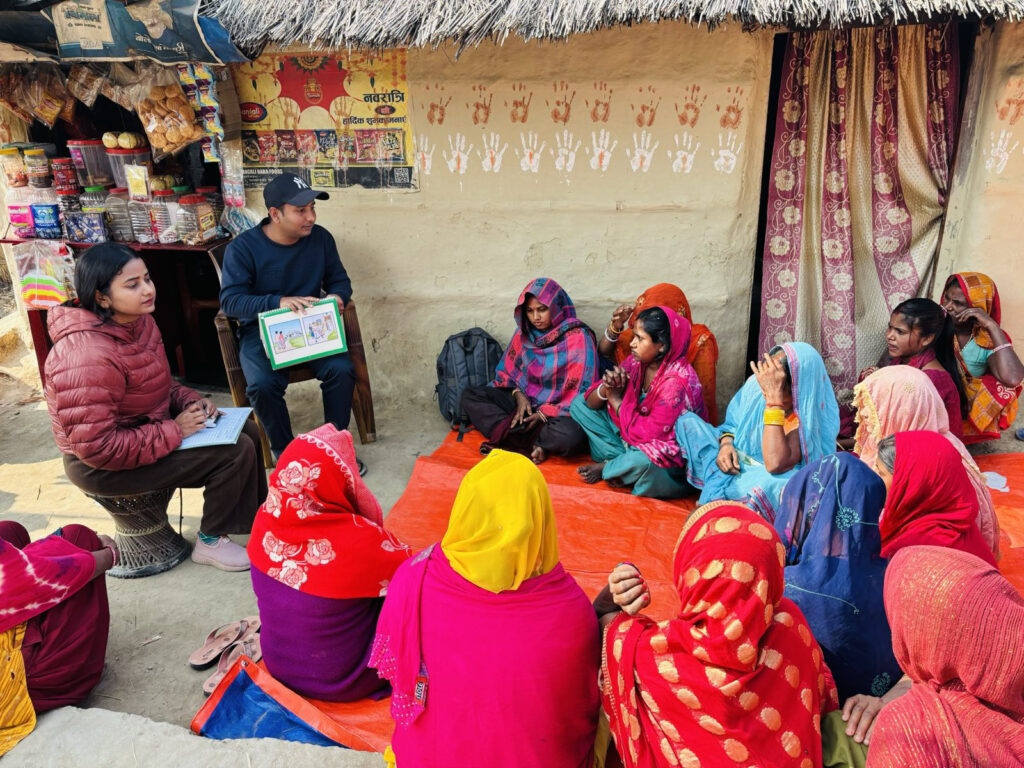
The health workforce in Madhesh Province faces significant shortages, and limited training and monitoring reduce the effectiveness of service delivery. Community health volunteers, including Female Community Health Volunteers (FCHVs), play a critical role in awareness and basic services, but coverage and support are uneven. Seasonal floods and climate variability further increase disease burden and limit access to healthcare.
Despite these challenges, there are opportunities to improve health outcomes. Government programs aimed at universal health coverage and free essential services are in place, and NGOs provide support for maternal and child health, nutrition, and community awareness. Digital health solutions, public-private partnerships, and community-based interventions can further strengthen service delivery and reach remote populations.
Recommendations for interventions include:
- Strengthening maternal and child health services by improving access to skilled birth attendants, prenatal and postnatal care, and expanding immunisation coverage, particularly in marginalised communities. Mobile health camps should be organised in flood-prone and remote areas to improve outreach.
- Enhancing healthcare infrastructure by upgrading health posts and PHCCs with essential medicines, diagnostic tools, and equipment, and constructing climate-resilient health facilities in vulnerable districts.
- Developing human resources through the recruitment and retention of qualified doctors, nurses, and technicians in rural areas, along with continuous training on maternal health, nutrition, disease surveillance, and emergency response.
- Promoting community health and awareness by strengthening FCHV programs to improve health literacy, hygiene practices, and nutrition awareness, and conducting campaigns to reduce early marriage, malnutrition, and gender-based disparities in healthcare.
- Addressing nutrition and food security by implementing micronutrient supplementation programs, school feeding initiatives, maternal nutrition programs, and community-based interventions such as kitchen gardening for dietary diversification.
- Strengthening disease prevention and surveillance by improving water, sanitation, and hygiene infrastructure, expanding vector control programs for malaria, dengue, and kala-azar, and establishing robust disease surveillance systems for early outbreak detection.
- Expanding digital and innovative health solutions through telemedicine and mobile health platforms, as well as using SMS, radio, and community channels to provide health education and emergency alerts.
- Preparing for disasters by developing contingency plans for floods, heatwaves, and epidemics, and training health workers in emergency response and rapid disease containment.
In summary, while Madhesh Province has made strides in healthcare access, challenges remain in terms of quality, equity, and resilience. Targeted interventions in infrastructure, human resources, community engagement, and disaster preparedness are essential to ensure accessible, inclusive, and sustainable healthcare for all residents.